Impact on pupils 19

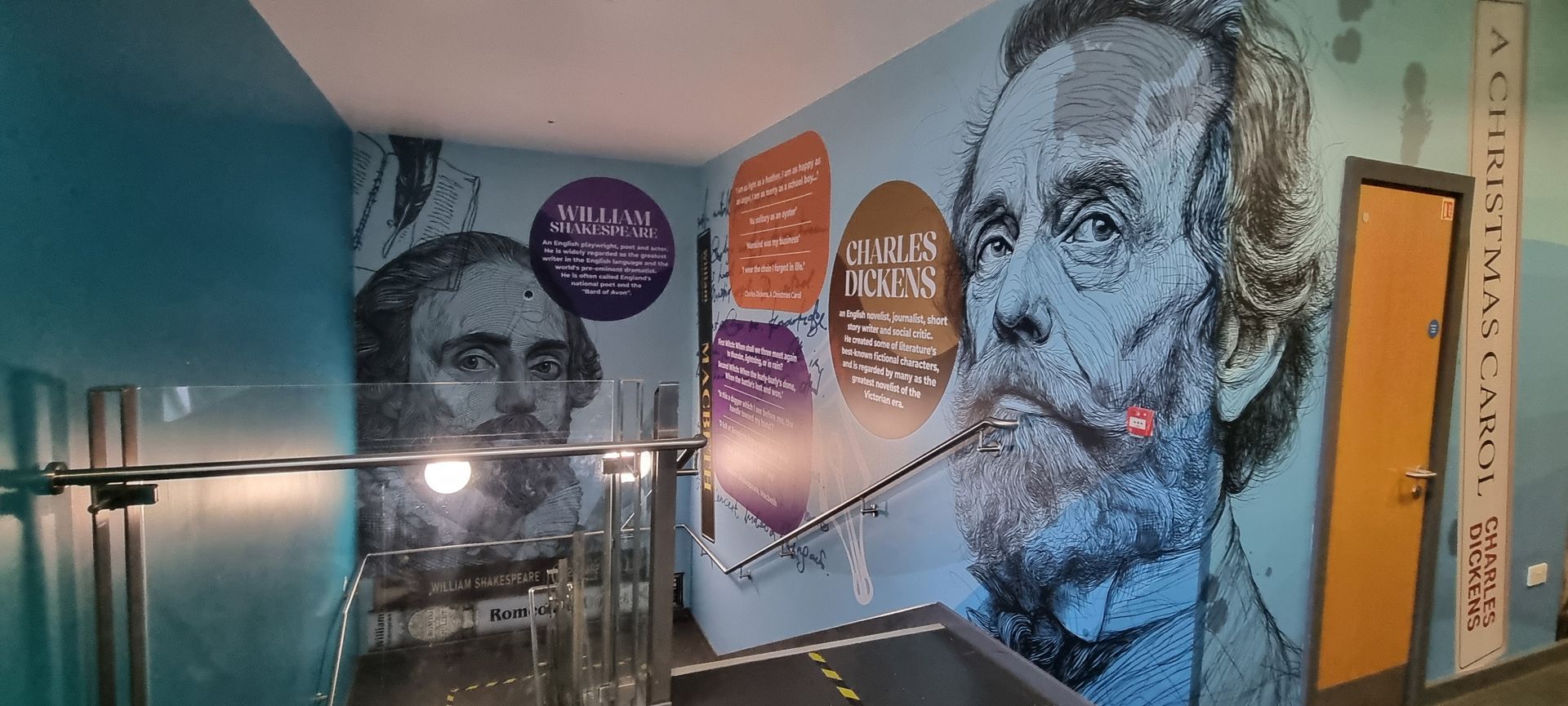
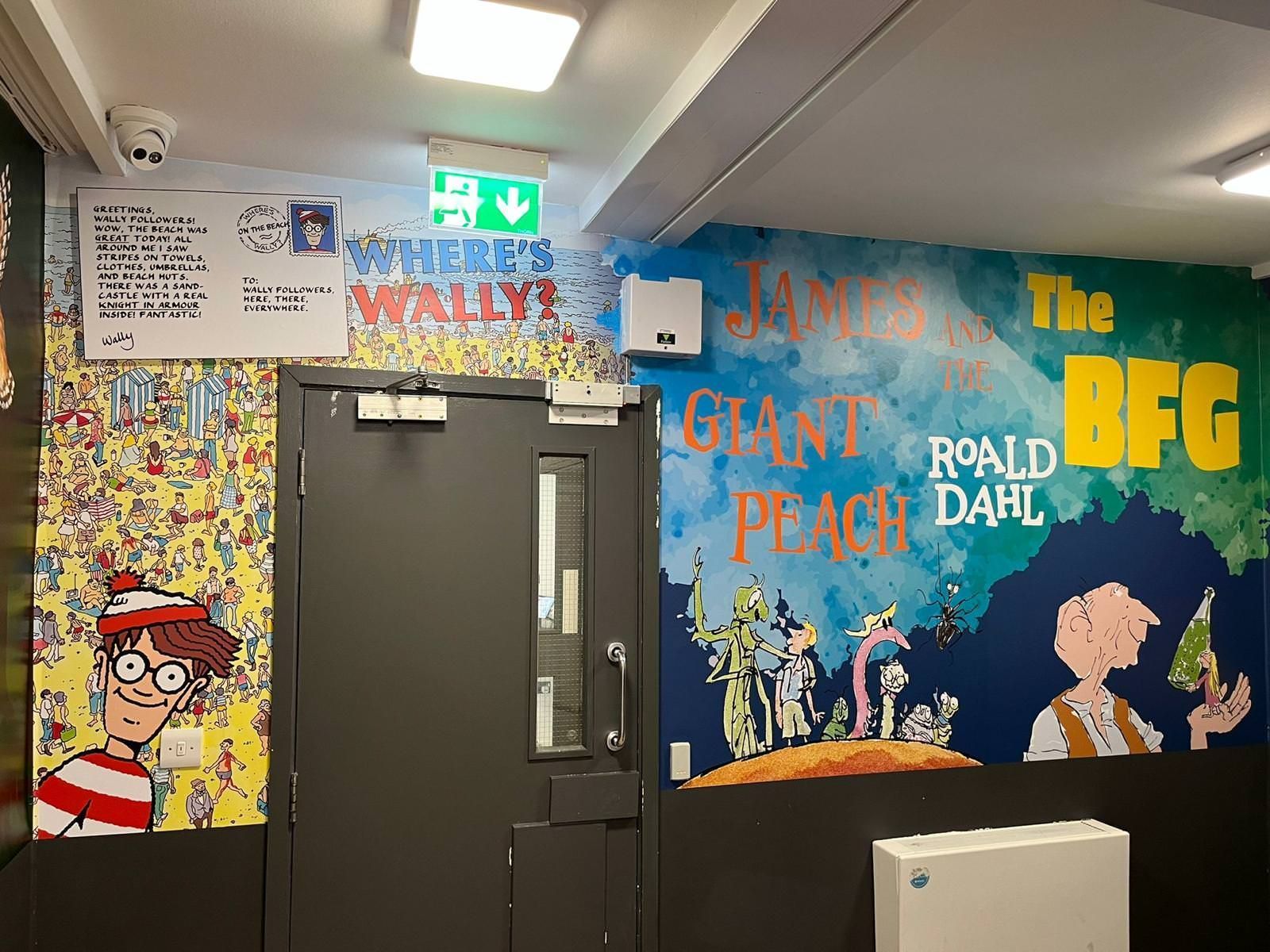
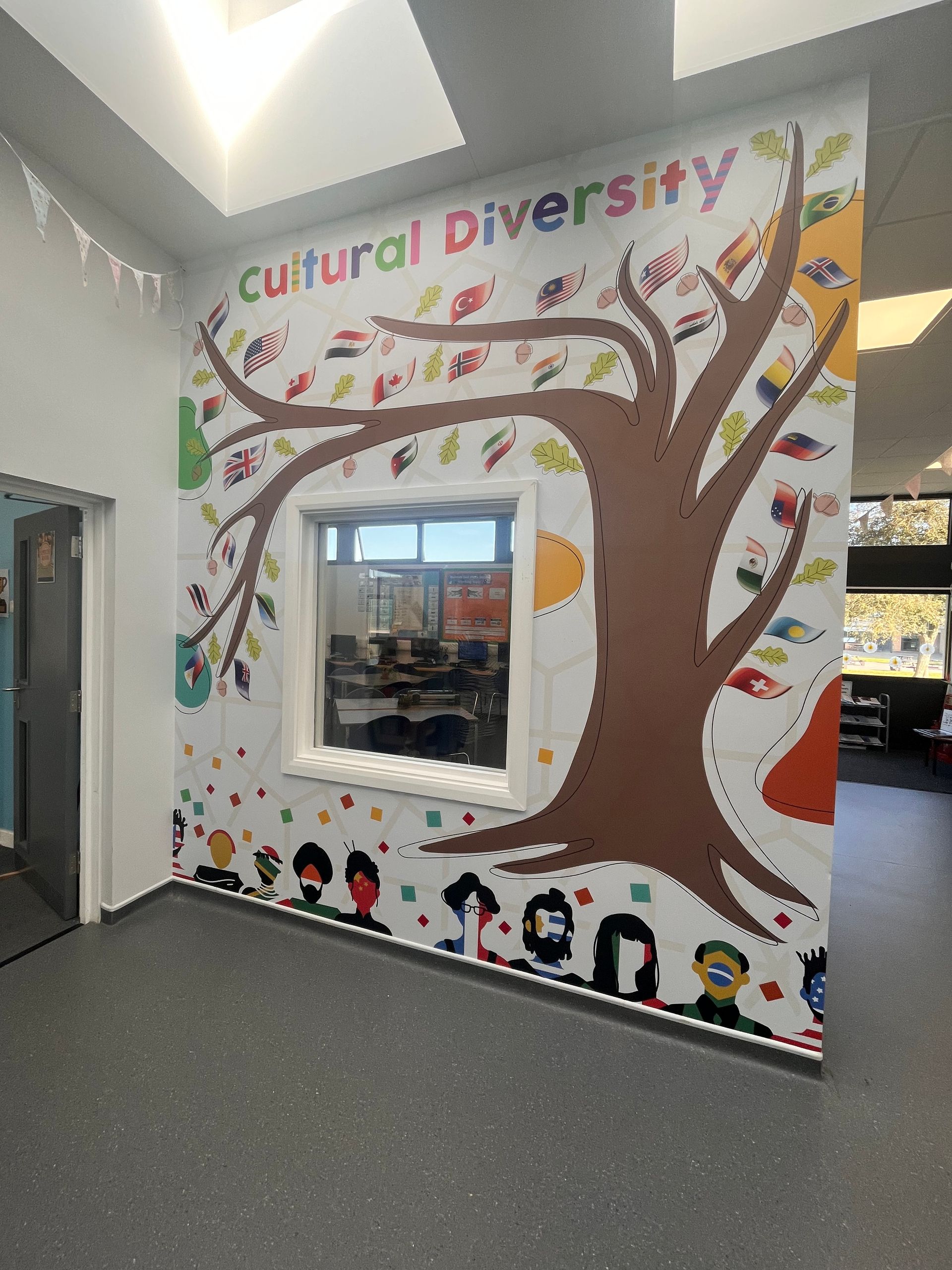
Wall graphics showcase stories and celebrations from different cultures, allowing children to explore narratives and traditions from around the globe and fostering a sense of multicultural awareness and understanding among young learners.
Using Wall Graphics to Enhance Cultural Education


Designing wall graphics that showcase tales, festivals, and customs from around the globe can significantly promote multicultural awareness and offer children insights into various viewpoints.


Here's a guide on crafting and incorporating wall visuals to bolster learning ; 


Essential Components for Teaching Cultural Studies

Cultural Myths; 

  • Explore the enchanting world of stories by depicting known myths and legends from various cultures, like Greek mythology, African folklore and Native American tales.
  • Illustrate these stories using a series of panels to make them visually engaging and easy to follow. 


Customs; 

  • Explore a range of celebrations and traditional observances such as Diwalis in India and the Festival of Lights or the Chinese New Year festivities to mark the start of a lunar year filled with joy and traditions shared by families and communities worldwide. 
  • During these celebrations, customs, such as practices in dances and music and the attire linked to these festivities, are often displayed. 


Cultural Famous sites; 

  • Essential Symbols to incorporate are icons such as the Eiffel Tower in France, the Great Wall of China, the Statue of Liberty in New York City, and the Pyramids of Egypt. 
  • Utilise maps to display the locations of cultures and showcase national flags and significant landmarks. 


"An array of characters, from backgrounds and their daily experiences;" 

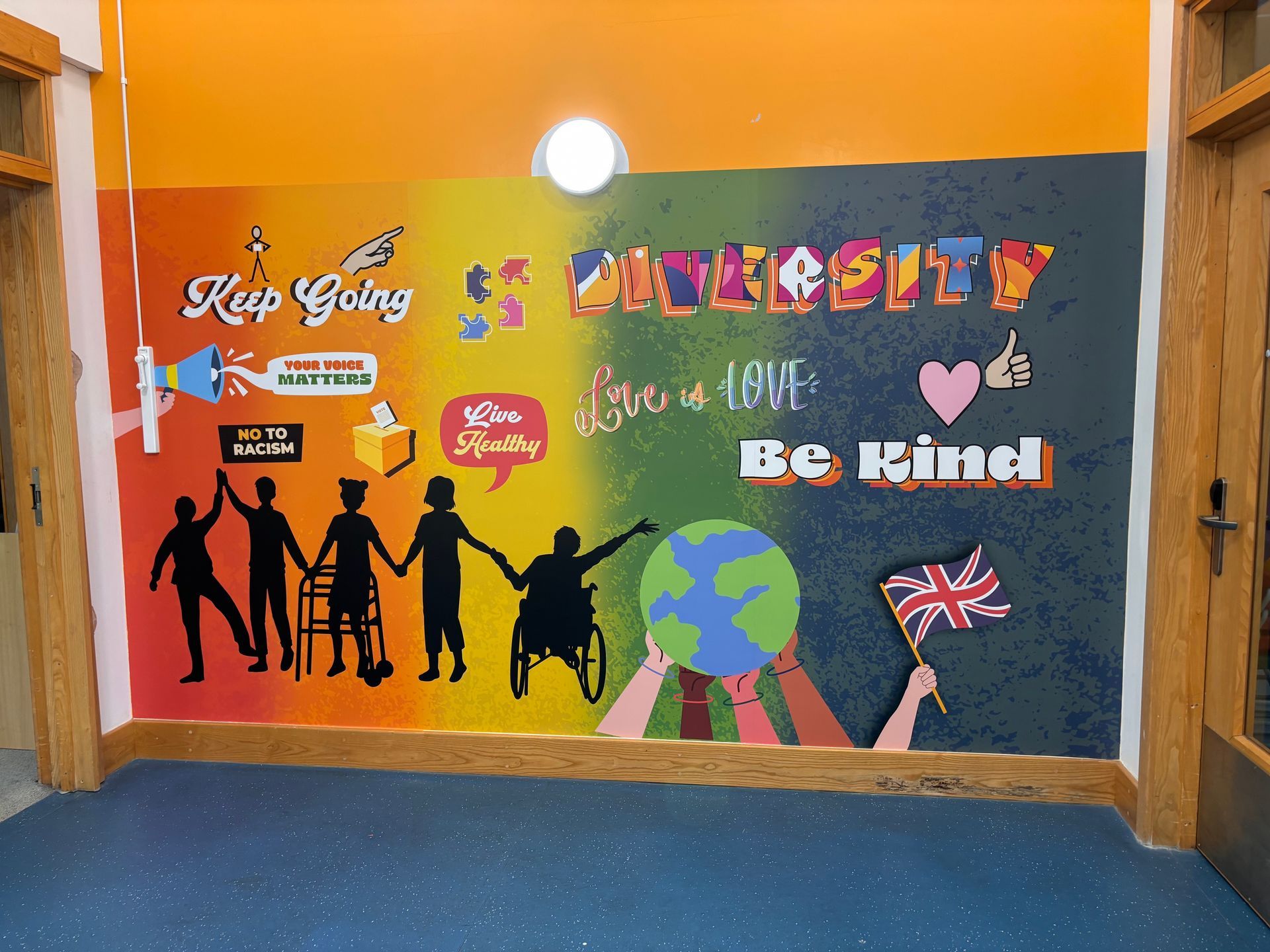
  • Utilise characters from backgrounds participating in routine tasks to showcase similarities and distinctions among them. 
  • Incorporate representations by including a range of skin tones, attire styles, and physical characteristics to depict a community accurately. 
Strategic Positioning for Optimal Effectiveness


  • Classrooms are where students gather for learning and education purposes. 
  • Dedicate classroom sections to cultures and rotate displays according to the current curriculum or international celebrations. 
  • Utilise story panels along the walls to educate about myths and legends by incorporating these tales into the journey. 


Hallways and corridors connect areas and facilitate movement between rooms and spaces in buildings. 

  • Create hallways by incorporating cultural themes that showcase maps of different regions as narratives and festive traditions unique to each culture. 
  • Add maps for students to explore, allowing them to delve into countries and their unique cultures. 


  • Create celebration walls by putting up displays in shared spaces showcasing a variety of festivals for students to explore and discover different traditions in their leisure time. 
  • Establish Global Citizen Panels to provide a platform for students to exchange insights into their heritage and share stories about their traditions and family history. 


Cosy reading corners; 

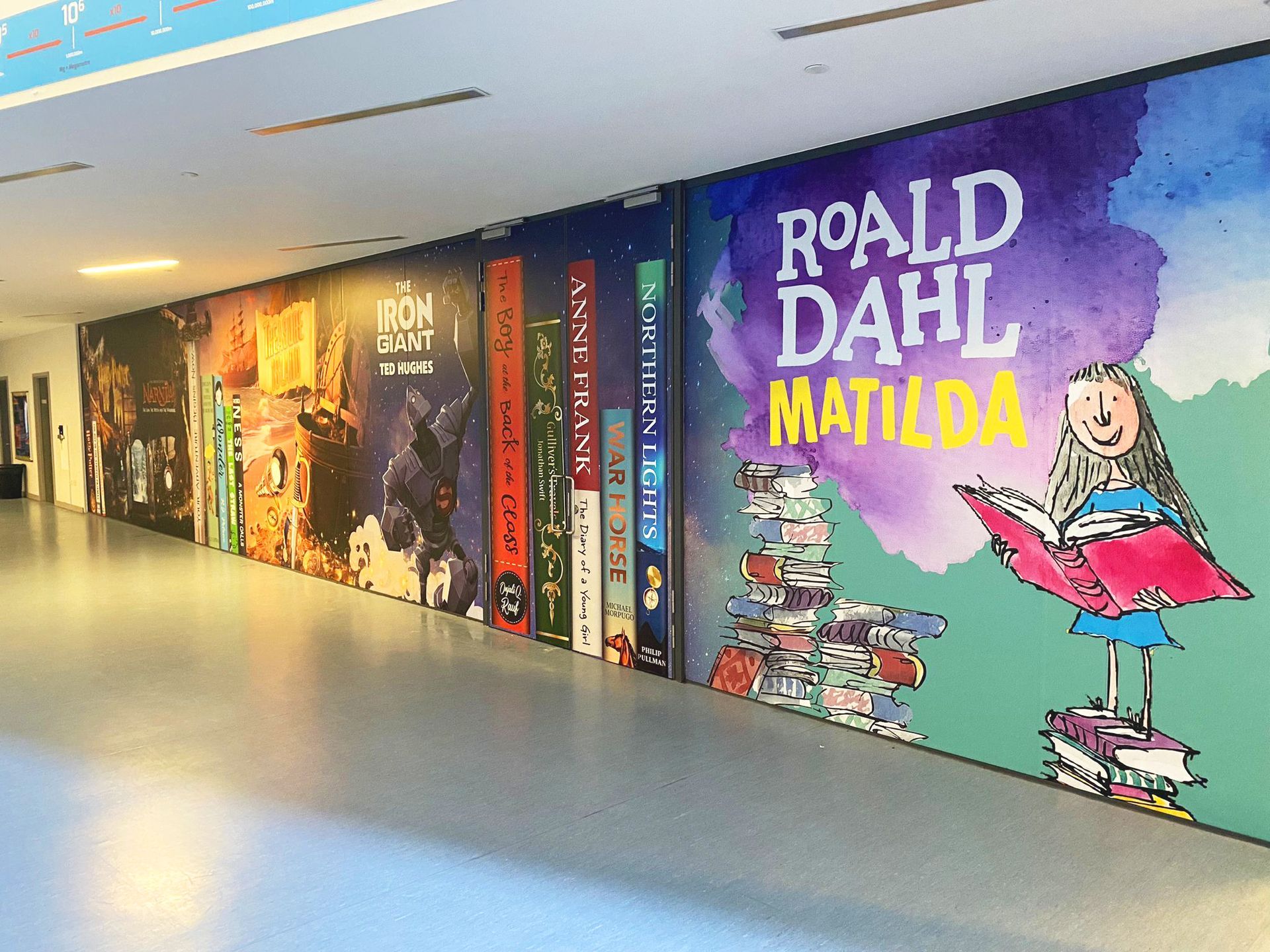
  • In reading spaces,​ use murals that illustrate scenes from known tales to inspire children to delve into books related to these narratives​.
  • Feature characters from backgrounds in mural paintings to enhance multicultural awareness through visual narratives. 


Approach for Putting Plans into Action 


The process of designing ; 

  • Incorporate the insights of experts and community stakeholders—including parents and leaders—to guarantee the accuracy and cultural sensitivity of the visuals used. 
  • Encourage students to contribute their narratives and customs during the design process to boost student engagement. 


Selecting the materials for the task. 

  • Select child-safe materials to ensure a non-toxic environment for children to engage with. 
  • Choose eco alternatives by selecting materials to encourage environmental stewardship. 


  • Ensure the installation is done by a professional for safety, to maintain an appearance, and to prevent alignment or damage problems. 
  • Make sure to place graphics at a height kids can easily see and reach. 


  • Maintaining maintenance and regular updates is essential to keep everything running smoothly and efficiently. 
  • Remember to maintain your graphics by scheduling cleaning and maintenance to ensure they stay fresh and engaging. 
  • Let's schedule updates to incorporate cultural narratives and festivities, maintaining an engaging and ever-evolving atmosphere. 


Cultural education wall graphics are a way to showcase aspects of culture and heritage.


Multicultural Narrative Boards; 

  • Presented as a series of connected illustrations are known myths and legends from various cultures, such as the cunning Anansi from African folklore, the courageous Mulan from Chinese tradition, and the epic saga of Perseus from Greek mythology. 
  • Students are drawn in by narratives that educate them on cultural traditions and legacies. 


The festive and holiday display wall; 

  • A lively mural showcasing a variety of festivals and holidays with depictions of customs, dress and cuisine linked to each event. 
  • Influencing by encouraging comprehension and admiration for cultural customs helps create a feeling of global unity. 


  • This is a detailed global map featuring components that students can explore by touching to discover information about the culture of each country, including critical monuments, significant foods, and renowned figures. 
  • This fosters a sense of adventure and wonder about the world while expanding one's understanding of geography and cultures. 


  • Graphics depict children from diverse backgrounds engaged in pursuits such as attending school​​​, playing​, and participating in family customs​​. 
  • They are emphasising the distinctiveness. Shared aspects of cultures foster compassion and mutual comprehension among people. 


Closing Ideas

Incorporating narratives and traditions into school wall art can greatly enrich education and foster multicultural awareness among students. These artistic displays enhance the learning environment's appeal and offer valuable educational advantages by introducing children to various viewpoints and nurturing a global mindset. This method of incorporating elements into school spaces through art installations can cultivate a compassionate school community that equips students with the skills needed to succeed in a diverse global society. 
By angel April 17, 2026
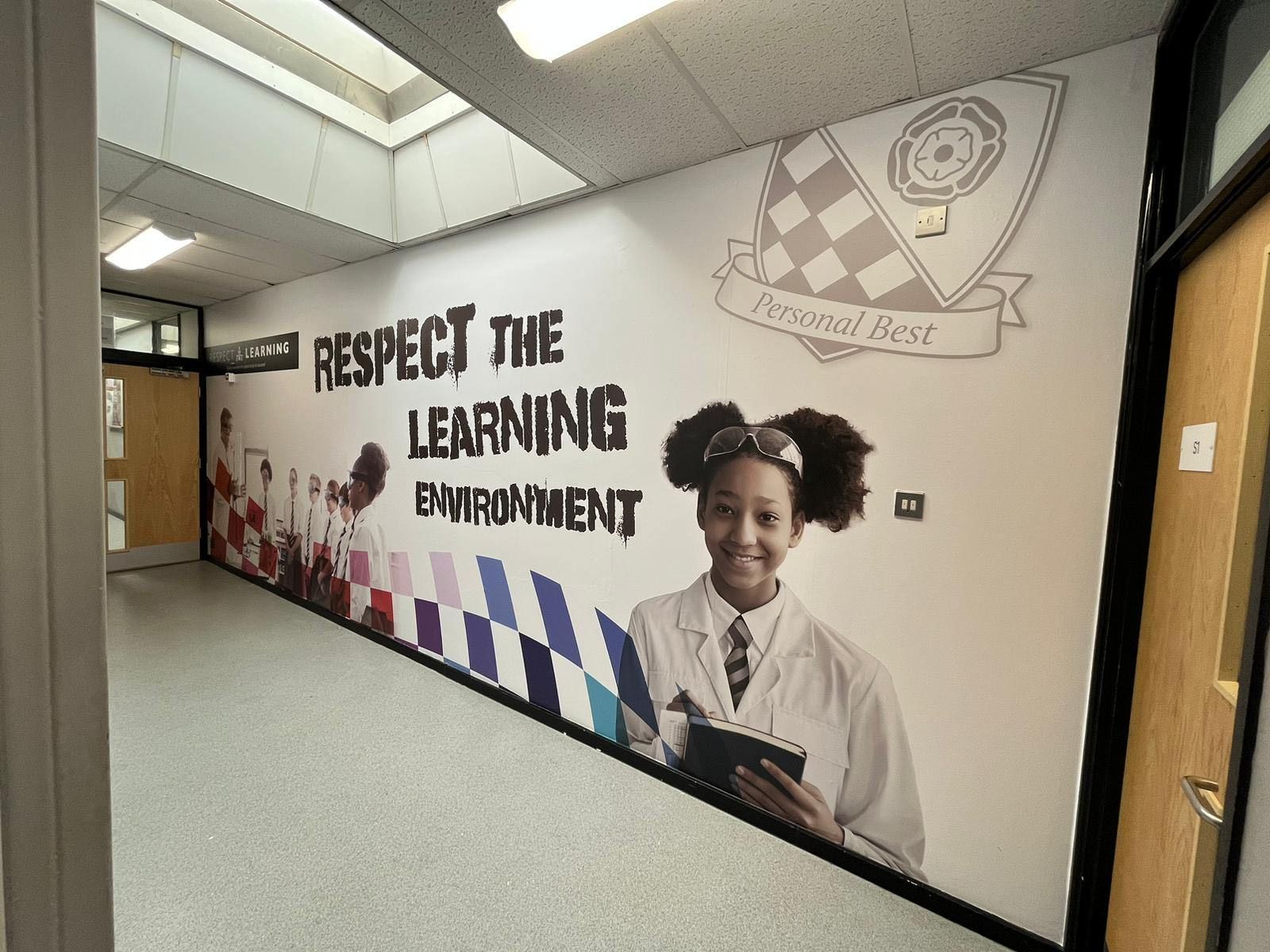
You’ve seen it before. A beautiful, vibrant wall display that looked incredible on the day it was installed. Fast forward six months, and the edges are starting to curl. A year later, it’s peeling away at the corners, or the vibrant blues and reds have started to look a little tired and faded. In a busy school environment, "good enough" usually isn't. When you are looking to transform your school corridors, reception areas, or classrooms, it is easy to focus entirely on the design. After all, the design is what tells your story. It’s what inspires your pupils and impresses your visitors. But the material those designs are printed on? That is what determines whether your investment lasts for a decade or ends up in the bin before the next OFSTED inspection. At Cubed Creative , we’ve spent 21 years working inside schools. We know that a corridor isn't just a walkway; it’s a high-traffic zone where hundreds of blazers, backpacks, and wandering hands pass by every single hour. Choosing the right school wall graphics materials is the difference between a long-term asset and a short-term headache. The Science of the "Shrink": Monomeric vs. Polymeric Vinyl If you’ve been gathering quotes for school wall graphics , you might have noticed a significant range in pricing. Often, the "cheaper" quotes are using what we call Monomeric vinyl. To keep it simple: vinyl is made of plasticisers. In monomeric vinyl, these molecules are short and "unbound." Over time, especially when subjected to the fluctuating temperatures of a school building, these molecules migrate. The result? The vinyl literally shrinks. When vinyl shrinks on a wall, it pulls away from the edges. It leaves a sticky, unsightly residue that attracts dust and dirt. It looks poor, and more importantly, it becomes a target for inquisitive fingers to pick at. This is why we champion polymeric vinyl school graphics  Polymeric vinyl is engineered with longer molecular chains. It is far more stable. It doesn't shrink, it doesn't curl, and it stays exactly where we put it. It’s the gold standard for long-lasting school wall displays . When we talk about durability, we aren't just talking about the print staying bright; we’re talking about the material staying bonded to the wall.
By Gary Boad April 6, 2026
The morning rush. You know the one. It is a whirlwind of lost shoes, half-eaten toast, and the ticking clock. Then comes the final hurdle: the school gate.
By angel March 20, 2026
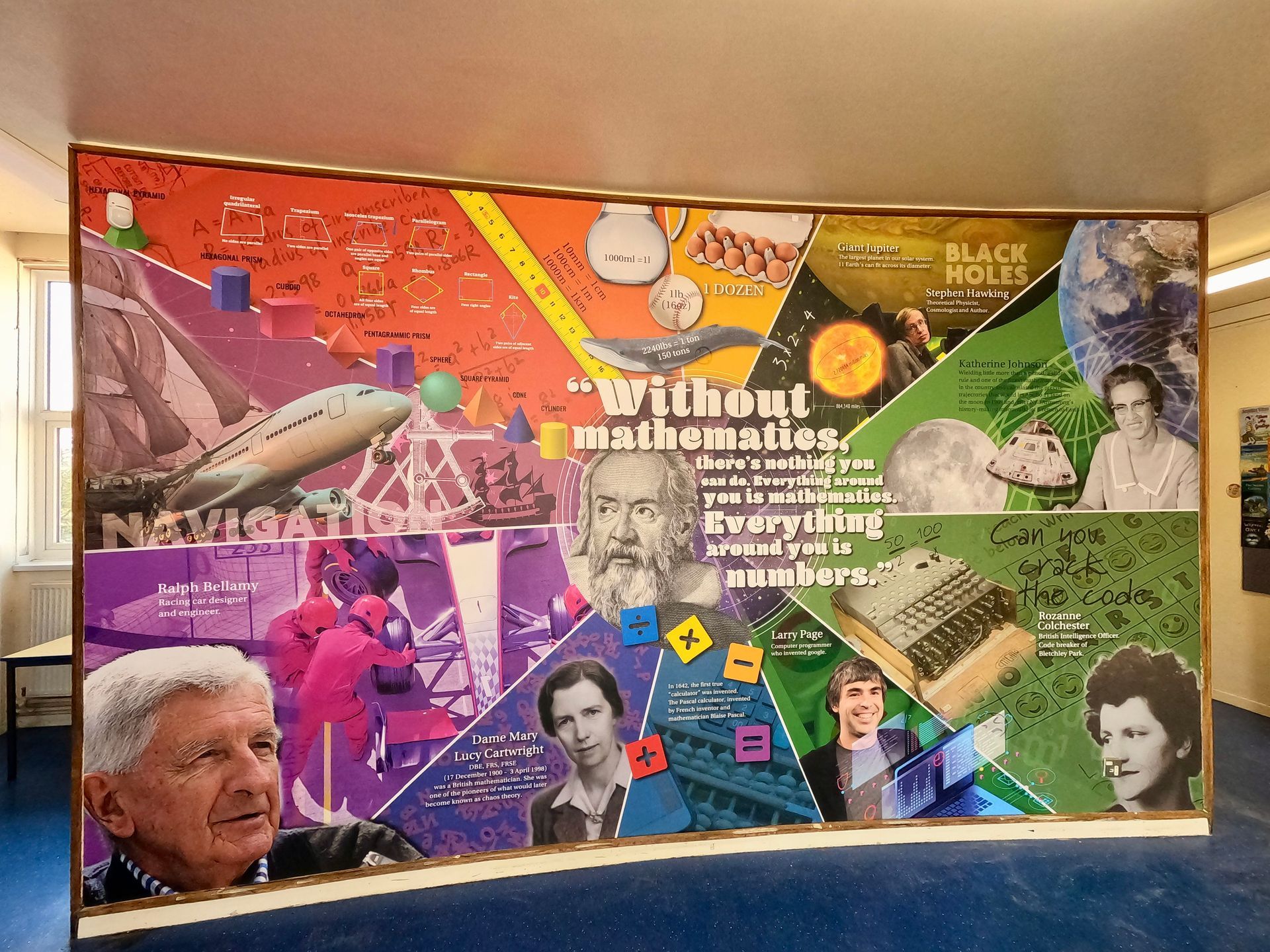
We’ve all been there. It’s 4:00 PM on a Tuesday, you’re armed with a staple gun that’s seen better days, and you’re staring at a vast expanse of blue sugar paper that refuses to stay flat. You want your classroom to be an inspiring hub of learning, but by the time the final border is pinned, it looks more like a chaotic explosion in a stationery shop. At Cubed Creative, we’ve spent the last 21 years helping schools transform their environments. We’ve seen the good, the bad, and the "why is that poster from 1994 still there?" The truth is, your walls are more than just partitions between rooms. They are silent teachers. When used correctly, school wall graphics can boost engagement and reinforce key concepts. When used poorly, they become a distracting mess that hinders focus. Here are the seven most common mistakes schools make with classroom wall displays, and, more importantly, how you can fix them. 1. The "Everything but the Kitchen Sink" Approach There is a common misconception that a "good" classroom is a covered classroom. We feel the urge to fill every square inch of brickwork with posters, bunting, and student work.  The Mistake: Visual overload. Research suggests that heavily decorated classrooms can actually decrease student performance. When every wall is screaming for attention, the brain struggles to filter out the noise. This leads to cognitive overload, particularly for pupils with SEND or sensory processing sensitivities. The Fix: Aim for the 20% rule. Keep at least 20% of your wall space clear. This "white space" gives the eyes a place to rest and allows the important displays to actually stand out. Think quality, not quantity.
By angel March 2, 2026
An Open Evening is not just an event on the calendar. It is a defining moment. Before the results are discussed. Before the curriculum is explained. Before questions are asked. Families are already forming an opinion. And your environment is leading that conversation. The Challenge: You Only Get One First Impression When parents walk through your doors, they are looking for reassurance. Is this school calm? Is it ambitious? Does it feel purposeful? Will my child belong here? A blank wall is a mystery. An inconsistent board confuses. A wall that has not changed for months or years is an indicator that communication with the wall is not important. But clear, intentional design builds confidence immediately. Your space either reinforces your message — or distracts from it.
By Gary Boad February 21, 2026
Step into any hallway at school. Something sits there before any text shows up at all. Quiet. A spark of drive. Heat in your steps. Yet at times, everything feels too heavy to carry A flash of colour stirs something deep, almost right away. Inside classrooms, that instinctual reaction holds weight - greater than many allow themselves to see. What keeps people okay isn't only rules or school counsellors. It shows up in each part of the daily world that kids navigate.
By angel February 13, 2026
A school hallway might hold paintings, award posters, and a time chart. Imagine stepping inside a quiet hallway. What happens if young learners find themselves wandering past moments from long ago? Every day, history timeline walls quietly spark interest. They transform ordinary rooms into moments where people pause, talk, and wonder. Curiosity grows without fanfare. Culture comes alive through simple displays. Conversations start where none were expected.
By angel February 7, 2026
Before a single word is spoken, a school has already started talking. From the moment someone steps through the doors, the environment sends signals. Calm or cluttered. Confident or uncertain. Purposeful or forgotten. These first impressions shape how visitors feel — and how much trust they place in the school.
By angel January 31, 2026
Giving pupils a visible voice in their school What kids think shows up on those walls - transparent, seen, shared. Their thoughts take shape in ways others can notice. This place proves voices count, without saying it outright. Not tucked away. Right there on the walls.
More Posts

Back to home